<?xml version="1.0" encoding="utf-8"?><feed xmlns="http://www.w3.org/2005/Atom" ><generator uri="https://jekyllrb.com/" version="3.10.0">Jekyll</generator><link href="https://infiniteloop.whilefalse.net/feed.xml" rel="self" type="application/atom+xml" /><link href="https://infiniteloop.whilefalse.net/" rel="alternate" type="text/html" /><updated>2024-09-12T10:20:12+00:00</updated><id>https://infiniteloop.whilefalse.net/feed.xml</id><title type="html">Infinite Loop Roller Derby</title><subtitle>A blog about roller derby, including coaching, tips, and personal experiences. By Tyne &amp; Fear and Team England skater Infinite Loop.</subtitle><author><name>Infinite Loop</name></author><entry><title type="html">Top 5 Jammer Tips</title><link href="https://infiniteloop.whilefalse.net/top-5-jammer-tips/" rel="alternate" type="text/html" title="Top 5 Jammer Tips" /><published>2024-09-11T20:11:00+00:00</published><updated>2024-09-11T20:11:00+00:00</updated><id>https://infiniteloop.whilefalse.net/top-5-jammer-tips</id><content type="html" xml:base="https://infiniteloop.whilefalse.net/top-5-jammer-tips/"><![CDATA[<p>In my time playing roller derby, I’ve had some excellent pieces of advice from teammates and players from other teams.</p>

<p>Here are the top 5 pieces of advice I’ve received, that have lead to the biggest improvements in my game.</p>

<p>I hope you can get some benefit from them too.</p>

<h2 id="1-dont-give-up">1. Don’t give up</h2>

<p>When I started out playing against walls who were as new as me, I could often skip past an entire wall in one move. As I started playing against more experienced players, I got despondent and frustrated that it wasn’t as easy.</p>

<p>But it’s not supposed to be easy! Even the best jammers in the world are having to battle and fight and put in all their effort to get through very good walls. It’s never going to be a walk in the park.</p>

<p>So it’s important to keep going and not get disheartened. You might end up getting recycled behind the whole pack (which is <em>really frustrating</em>), or blockers you’ve already beaten might end up reforming in front of you (which is also <em>really frustrating</em>). These things are all normal, and all part of the process. If blockers are recycling or having to reform, it means you’re <em>making them move</em>, which is <strong>progress</strong>.</p>

<p>One caveat: it’s important to vary your intensity. <em>Don’t give up</em> doesn’t mean <em>go 100% full beans for 2 minutes</em>. No-one can do that and you’re bound to tire yourself out. Don’t be afraid to drop a gear for a few seconds to recover, then go again.</p>

<h2 id="2-youre-in-charge">2. You’re in charge</h2>

<p>It’s quite intimidating being a jammer - it can feel a bit like you’re on your own, and the whole team is relying on you to get points. Plus, you’ve got 4 full-sized humans against just one of you. How are you ever going to get past them all?</p>

<p>It took me a long time to realise this, but as a jammer <em>you are the one in the position of power</em>, not the blockers. The blockers <em>have to follow you</em>. If they don’t, you’re instantly through.</p>

<p>You must use this power to your advantage. Don’t be tentative and “ask permission” for the blockers to let you through. Move them! They have to follow you!</p>

<p>What this means in practice is that you should always be moving, always be faking/juking, and generally keeping the blockers confused and busy.</p>

<p>It also really helps with keeping a positive state of mind, knowing that the <em>blockers are worried</em> about what I’m going to do, not the other way around.</p>

<h2 id="3-stay-on-track">3. Stay on track</h2>

<p>This is probably <strong>the number 1 tip</strong> I’ve been given, and I’ve lost count of how many times it’s been said to me.</p>

<p>It can be really tempting, especially when you’re tired and going up against really solid walls, to dive for an edge out of exasperation. You might get lucky, but chances are you will get knocked off and recycled.</p>

<p>It’s super tiring being recycled all the time. And each time it happens, you erase all the progress you’ve made so far.</p>

<p>This is especially important when you’re out at the front of the pack, say you’ve beaten two blockers and just have a final blocker to get past. At this point, it’s <em>really</em> important to stay on track, so I try to stay as central to the track as I can. Yes, this means it will be harder to get past, but it reduces the risk of getting hit off and having to start from square one. You can still move the single blocker laterally, just don’t dive for an edge unless you’re sure you’ve made enough space.</p>

<h2 id="4-use-your-offence">4. Use your offence</h2>

<p>You’re eventually going to come up against a wall which is just too good for you to beat by yourself - you’re going to need offensive help.</p>

<p>Typically the jammer will try to move the wall to one side of the track, then attack so the wall is forced to bed in. Then the offence can enter on the other side of the track, hopefully making a nice big space for the jammer.</p>

<p>You’re likely not going to get past in a single move though, so you’ll need to keep looking for your offence as you move through the wall, and seeking opportunities to make use of them. I’m a big fan of hip or shirt whips, which can help me change direction and speed really quickly.</p>

<h2 id="5-relax">5. Relax</h2>

<p>It’s a cliché, but the more relaxed you are, the better you’re going to play.</p>

<p>Jamming is a creative process, it requires quick thought and reaction to unexpected circumstances. If you’re stuck in your head worrying about getting lead, or how many points you need to score, or anything else, your creative brain is not going to be working at full capacity.</p>

<p>This is obviously easier said than done, so you need to think about what relaxes you and how to get in the mindset of “this is just a hobby, it doesn’t matter”. I’m going to write a future post about my personal game day preparation, so keep your eyes peeled for that. But for now, some things that help me are:</p>

<ul>
  <li>Relaxing music</li>
  <li>Trying to remember that this is a hobby that I enjoy and is not supposed to be stressful</li>
  <li>Doing some silly warm ups on track to get my body nice and loose</li>
  <li>Clearing my mind and not thinking about the game or the score</li>
</ul>]]></content><author><name>Infinite Loop</name></author><category term="jamming" /><summary type="html"><![CDATA[In my time playing roller derby, I’ve had some excellent pieces of advice from teammates and players from other teams.]]></summary></entry><entry><title type="html">What To Upgrade First?</title><link href="https://infiniteloop.whilefalse.net/what-to-upgrade-first/" rel="alternate" type="text/html" title="What To Upgrade First?" /><published>2024-09-10T18:07:00+00:00</published><updated>2024-09-10T18:07:00+00:00</updated><id>https://infiniteloop.whilefalse.net/what-to-upgrade-first</id><content type="html" xml:base="https://infiniteloop.whilefalse.net/what-to-upgrade-first/"><![CDATA[<p>So you’ve joined a new skater intake, you’re becoming addicted to roller derby (as we all do), and you’re wanting to upgrade your kit.</p>

<p>But where to start?</p>

<p>Firstly, you don’t have to spend a fortune on kit to be able to progress. I skated in my <a href="https://www.google.com/search?q=suregrip+gt-50">SureGrip GT-50</a> beginner skates for a good while before I upgraded anything. In fact, I still skate in my GT-50 boots.</p>

<p>If you really want to spend some money, this is the order I think will get you the most benefit for the least cost.</p>

<p class="notice">I’m not affiliated to any brand, this is just my experience.</p>

<h2 id="helmet">Helmet</h2>

<p><img alt="S1 Helmet" src="/assets/images/s1.jpg" class="align-left" width="200" /></p>

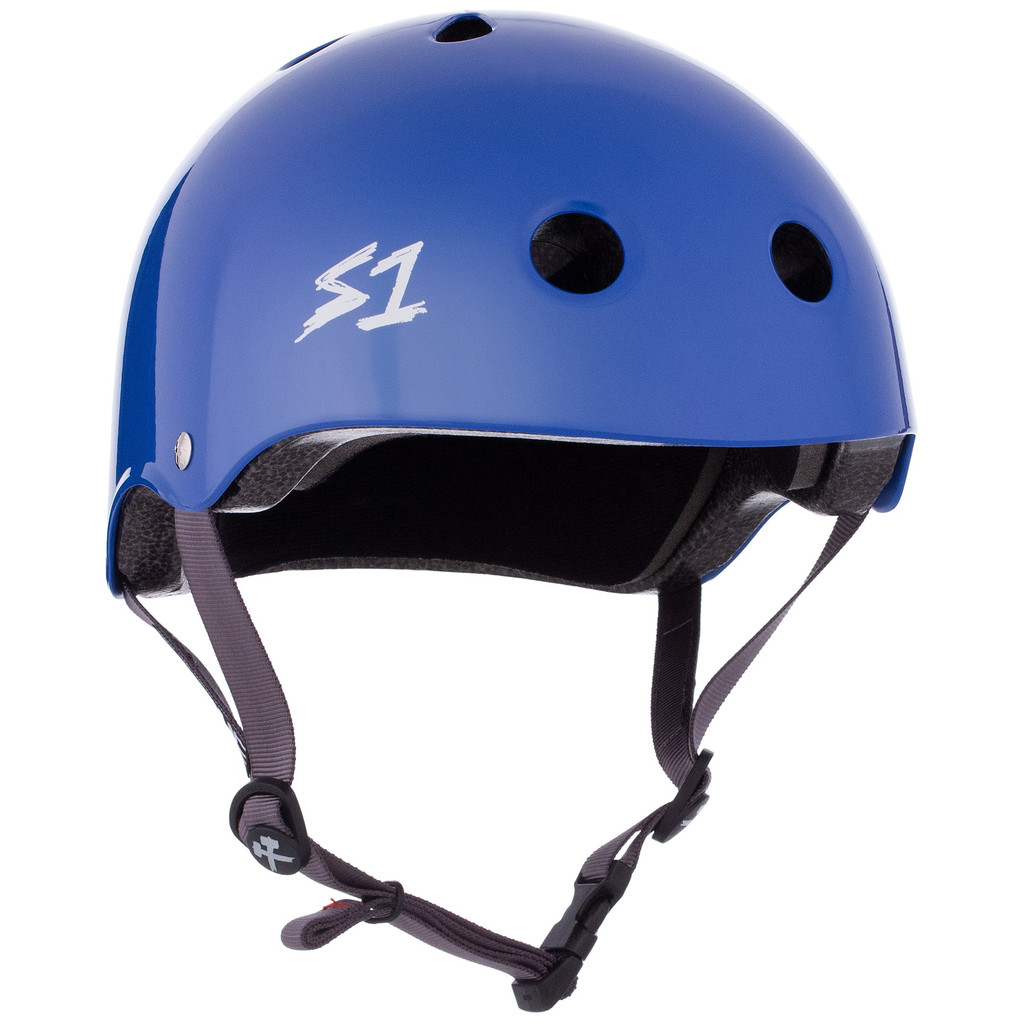
<p>Before you spend a penny upgrading your skates or anything else, buy the best helmet you can afford. You only get one brain, don’t take any risks with it.</p>

<p>The most popular ones I’ve seen are <a href="https://s1helmets.co.uk/">S1</a>, <a href="https://www.triple8.co.uk/collections/helmets">triple eight</a>, or <a href="https://uk.bauer.com/collections/ice-hockey-helmets">Bauer</a>. You want to make sure it’s rated for multiple impacts, which a lot of cheap helmets aren’t.</p>

<h2 id="knee-pads">Knee pads</h2>

<p><img alt="187 Killer Pro Knee Pads" src="/assets/images/187-kneepads.webp" class="align-right" width="200" /></p>

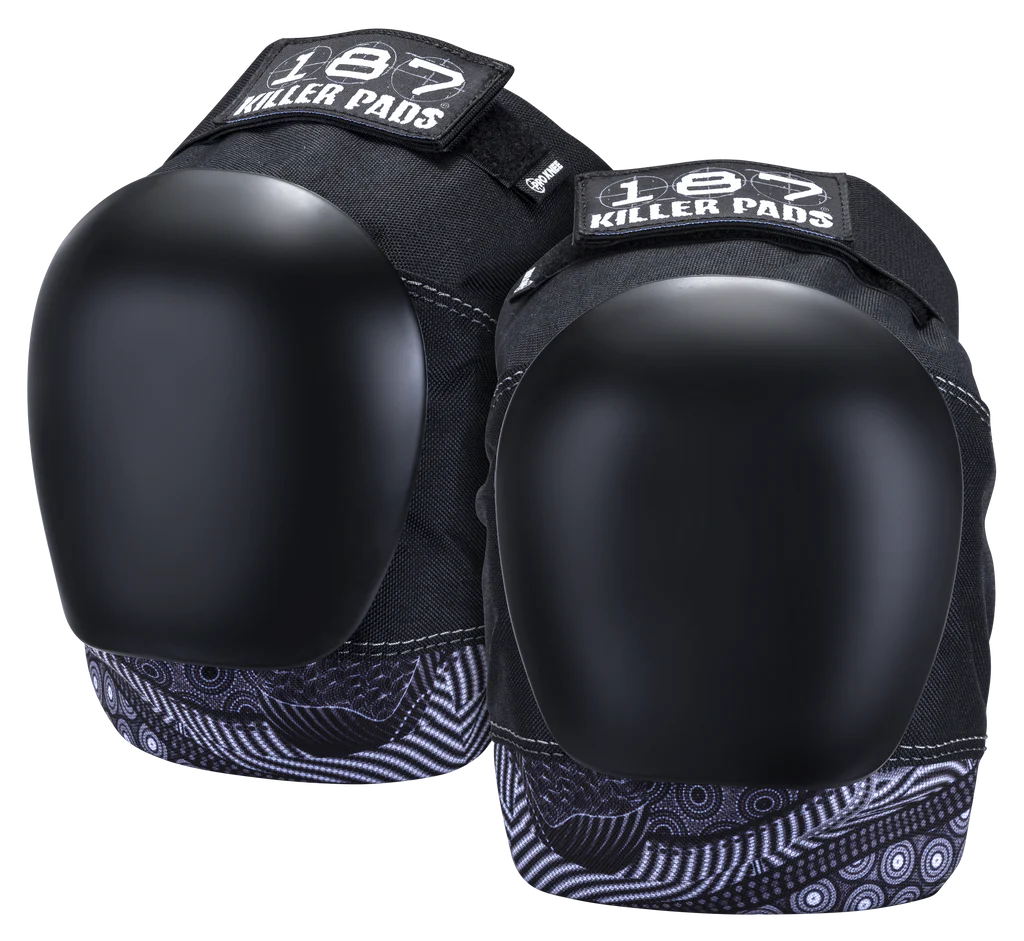
<p>You’re going to be falling on your knees <em>a lot</em>, so your knees will thank you if you get some pads with extra protection.</p>

<p><a href="https://187killerpads.com/collections/knee-pads">187</a>, <a href="https://s1helmets.co.uk/s1-pads/pro-knee-pads/">S1</a> and <a href="https://www.doublethreatskates.co.uk/products/tsg-roller-derby-kneepads-2-0">TSG</a> are all popular brands, but anything that’s built specifically for roller derby (rather than skateboarding or park skating) will be a good bet.</p>

<h2 id="wheels">Wheels</h2>

<p><img alt="Radar Halo Wheel" src="/assets/images/radar-halo.jpg" class="align-left" width="200" /></p>

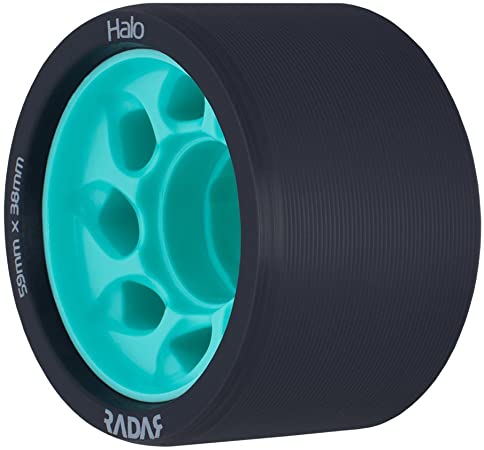
<p>Upgrading from my stock GT-50 wheels to <a href="https://www.doublethreatskates.co.uk/products/radar-halo-wheels">Radar Halo’s</a> made a massive difference to me early on. Suddenly, I was able to get a bit of slide in plow and hockey stops, and it made me way more stable and faster in general.</p>

<p>There’s a whole world out there of brands, sizes, hardness’s, and materials. The hardness you need will depend on what surface you train on, so asking teammates for advice (or to try out their wheels) is useful.</p>

<p>In general, you want:</p>

<ul>
  <li>Harder wheels (higher duro, <em>e.g. 97A</em>) if you’re heavier, or if you want more maneuverability and slide.</li>
  <li>Softer wheels (lower duro, <em>e.g. 84A</em>) if you’re lighter, or if you want more stability.</li>
</ul>

<h2 id="toe-stops">Toe stops</h2>

<p><img alt="Gumball SuperBall Toe Stops" src="/assets/images/gumball-superballs.jpg" class="align-right" width="200" /></p>

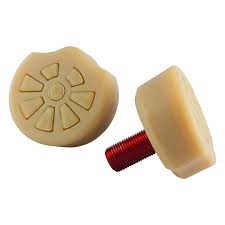
<p>Stock toe stops are often very small and really hard, which makes toe stop work more difficult than it should be.</p>

<p>I invested in a pair of <a href="https://www.doublethreatskates.co.uk/products/gumball-superball-toe-stops">Gumball SUPERBALLs</a>, which are <em>massive</em> and make toe stop work much easier and safer. The <a href="https://www.doublethreatskates.co.uk/products/gumball-version-2-0">regular Gumballs</a> are smaller but also popular. Some other popular brands are Bionic and Chaya.</p>

<p>A common issue with toe stops is that they come loose in vigorous play - the best solution I’ve found is a bit of <a href="https://www.amazon.co.uk/loctite-threadlocker-blue-242/s?k=loctite+threadlocker+blue+242">Loctite Blue</a> on the threads (confusingly comes in a red bottle).</p>

<h2 id="cushions">Cushions</h2>

<p><img alt="SureGrip Cushions" src="/assets/images/suregrip-cushions.webp" class="align-left" width="200" /></p>

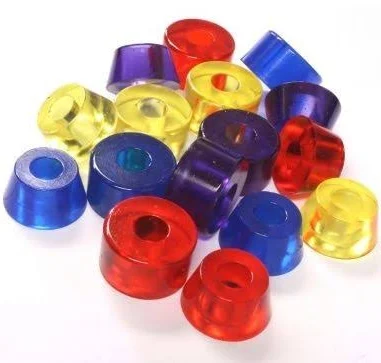
<p>Cushions are the little bits of plastic that sit between your plate and your trucks, which allow the truck to move so you can turn.</p>

<p>The harder the cushions, the more force you’re going to have to provide to turn, which tends to give you more stability. Softer cushions will make it easier to turn, giving you more maneuverability - but if you’re not ready yet, can make you unstable.</p>

<p>The beauty of cushions is they are <em>dead cheap</em> (about 100x cheaper than new plates), so you can buy a few different hardness’s and try them out. Different plates require different shaped cushions, so make sure you get the right ones for your plates.</p>

<h2 id="plates">Plates</h2>

<p><img alt="Pilot Falcon Plates" src="/assets/images/pilot-falcon-plates.webp" class="align-right" width="200" /></p>

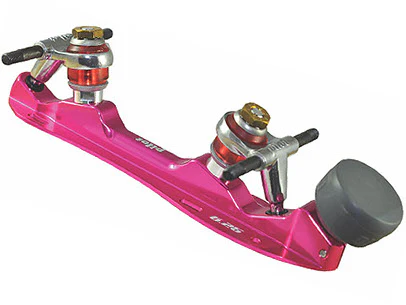
<p>Things can start to get expensive at this point, so I’d hold off until you’re absolutely sure you know you want to upgrade. It can make a big difference moving from a nylon plate that comes on most beginner skates, to a higher-end metal plate.</p>

<p>Again, there are loads of different variables around kingpin angle, size, material, weight, cushions etc. To be honest, I just went with what was popular in my team and bought some <a href="https://www.doublethreatskates.co.uk/collections/roller-derby-plates/products/falcon-plate">Pilot Falcon</a> plates (featuring <em>Aircraft Grade Aluminum</em>, which is something I never thought I’d need to purchase!)</p>

<p>At first I found them really wobbly, and I couldn’t get my trucks tight enough. But after a little while I got used to it, and am now really happy with the extra maneuverability.</p>

<p>Hopefully there’s someone in your league who can help you fit new plates to your existing boots.</p>

<h2 id="boots">Boots</h2>

<p><img alt="Antik Jet Carbon Boots" src="/assets/images/antik-jet-carbon.jpg" class="align-left" width="200" /></p>

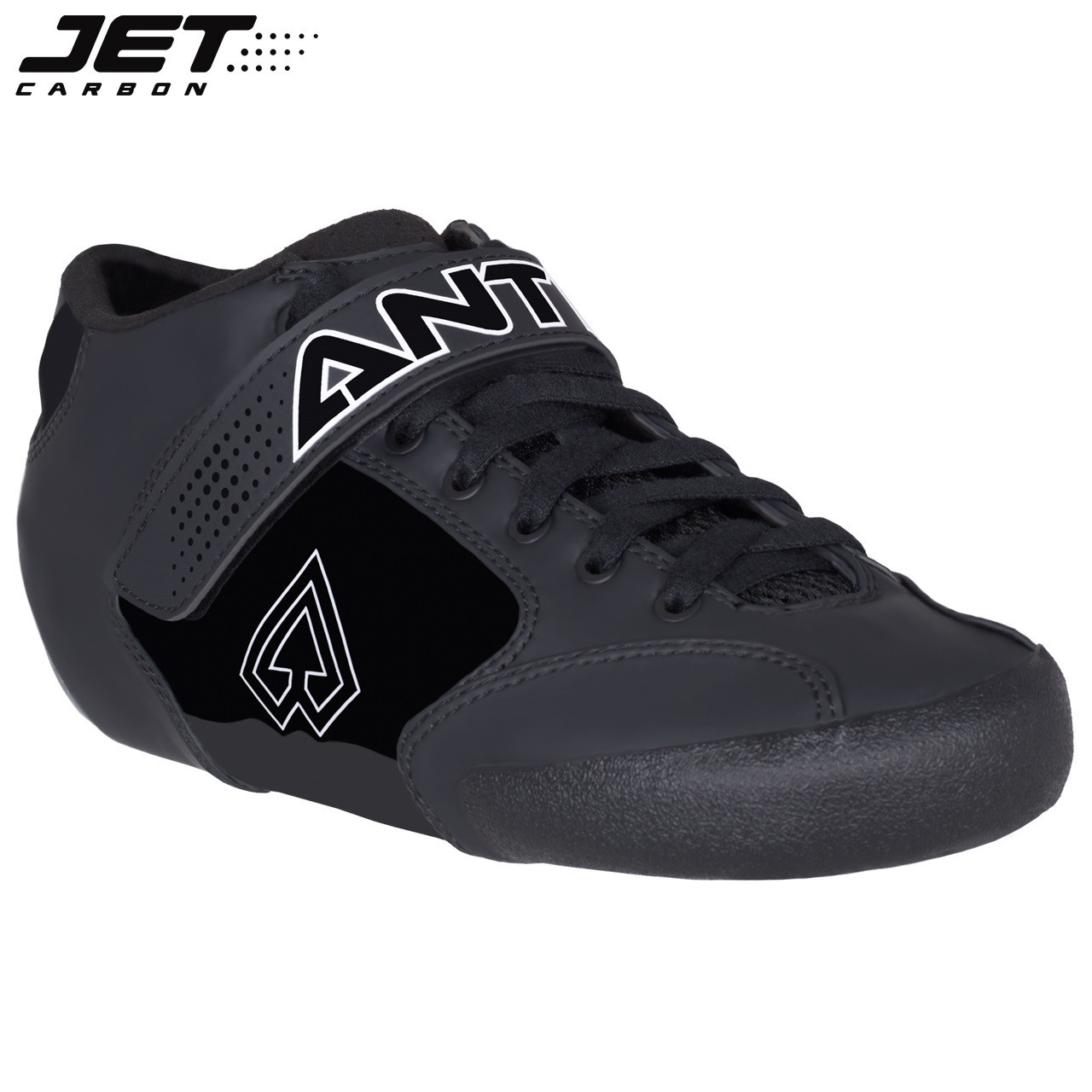
<p>I haven’t upgraded my boots yet. I still use my beginner GT-50 boots, although at this point I’m not sure if they’re more tape than boot. This will be my next upgrade, but I’m still researching the best options.</p>

<p>I can’t really recommend any particular boots, but I’ll probably go for a <a href="https://www.doublethreatskates.co.uk/collections/roller-derby-boots/products/in-stock-bonts">Bont</a> or <a href="https://www.doublethreatskates.co.uk/collections/roller-derby-boots/products/antik-jet-carbon-2">Antik</a>, which seem to be the most popular (and most readily available).</p>

<h2 id="other-stuff">Other stuff</h2>

<ul>
  <li><strong>Jam straps</strong> - Supposed to help keep your feet secure in your boots, if you’re having issues with them moving around.</li>
  <li><strong>Toe guards</strong> - Probably would have been a good idea, but I ended up just covering my toe in tape instead.</li>
  <li><strong>Aesthetics</strong> - Who doesn’t like some pretty colours? Laces, stickers, boot accessories - all completely non-essential, but fun.</li>
  <li><strong>Skate bag</strong> - There are dedicated skate bags, but a lot of people just use a large sports bag or small suitcase. As long as it fits your skates, pads, helmet, and a space for random accessories like tools and tape etc.</li>
  <li><strong>Skate tool/spanner/Allen keys</strong> - Always useful to have in your bag, although someone will normally have one in an emergency.</li>
  <li><strong>Gaffer tape</strong> - A must have in your skate bag, useful for fixing pads or skates in a pinch.</li>
</ul>

<h2 id="summary">Summary</h2>

<p>After writing all that, I now realise how much I’ve spent on skate equipment. But it doesn’t have to be expensive - beginner skates can take you a long way.</p>

<p>I hope you enjoy your roller derby journey as much as I have so far!</p>]]></content><author><name>Infinite Loop</name></author><category term="kit" /><summary type="html"><![CDATA[So you’ve joined a new skater intake, you’re becoming addicted to roller derby (as we all do), and you’re wanting to upgrade your kit.]]></summary></entry><entry><title type="html">Basic Jammer Strategy</title><link href="https://infiniteloop.whilefalse.net/basic-jammer-strategy/" rel="alternate" type="text/html" title="Basic Jammer Strategy" /><published>2024-09-07T10:04:48+00:00</published><updated>2024-09-07T10:04:48+00:00</updated><id>https://infiniteloop.whilefalse.net/basic-jammer-strategy</id><content type="html" xml:base="https://infiniteloop.whilefalse.net/basic-jammer-strategy/"><![CDATA[<blockquote>
  <p>Skate fast, turn left.</p>
</blockquote>

<p>When I started jamming, the extent of my knowledge was that I had to get on the other side of the opposing blockers. The mechanics of that were completely mysterious - I’d just dance around a bit and hope for the best.</p>

<p>Nowadays, I have a bit more of a plan, which I will share in the hope it might help some others just starting out.</p>

<h1 id="my-patented-three-step-jammer-strategy-">My Patented Three Step Jammer Strategy ©</h1>

<ol>
  <li>Make space</li>
  <li>Take space</li>
  <li>Repeat</li>
</ol>

<h2 id="1-make-space">1. Make space</h2>

<p>Your goal is to move the wall in such a way that they leave a <em>gap</em> which you can fit through. At first, you’ll have no idea if a gap is big enough to fit through, you’ll just have to try. With experience, you’ll become more aware of your abilities (and that of the opposing blockers), and get a sense of what gaps are worth taking.</p>

<h3 id="lateral-movement">Lateral movement</h3>

<p>Moving side-to-side.</p>

<p>The wall will have to follow you. Eventually (hopefully), one or more of the blockers will make a mistake and leave you some space.</p>

<p>Some jammers like to make the wall commit at each step by pushing on them (e.g. <em>move to the outside; push; move to the middle; push; move to the inside; push</em>). Others like to keep their distance to give away less information about where they are. Try each method and see what works for you. Or, better still, do both and mix it up.</p>

<h3 id="misdirection">Misdirection</h3>

<p>The most common form of misdirection is <em>juking</em>, which means faking a movement in one direction, then actually moving in the other direction. You can do this multiple times before actually choosing on a direction to move in.</p>

<p>You can juke with just your upper body, or your feet as well. Upper body is quicker and uses less energy, but good blockers can see through it. Moving your feet uses more energy and is slower, but will trick blockers more easily.</p>

<p>There are many other forms of misdirection you can try:</p>

<ul>
  <li>Varying your speed as you come in to the pack (e.g. come in slow, then accelerate; or come in really fast, then stop in front of the wall).</li>
  <li>Approaching the wall from one side, then moving to the other at the last minute.</li>
  <li>Pretending to go for an apex jump, then doing something else.</li>
  <li>If you’re not lead jammer, taking off the star and pretending to pass it to your pivot.</li>
  <li>Pretend to be really tired out, then apply a burst of acceleration.</li>
  <li>I’ve seen some jammers just point at a random side, which can confuse blockers.</li>
  <li>My teammate <em>Sparky</em>  does “magician hands”, where he waves his hands around in a mystical way. It’s surprisingly effective.</li>
</ul>

<h3 id="pushing--hitting">Pushing &amp; Hitting</h3>

<p>I’m a skinny, light jammer, so I don’t have much success pushing blockers out of the way. But it is a possibility if your body and jammer style suits it. I’d caution against doing it too much, because it’s very tiring.</p>

<p>Hitting is different, though. Hitting is not really about moving a blocker from their current position, but about <em>forcing them to make a correction</em>. For example, a nice shoulder hit to the kidney will make most blockers at least stumble, forcing them to correct their stance. The moment they are forced to correct is your opportunity to take advantage.</p>

<p>The two main types of hitting I use are:</p>

<ul>
  <li>Shoulder hits</li>
  <li>Hip hits</li>
</ul>

<p>They’re most effective when they come as a surprise, e.g. push on the wall for a bit to get them bedded in; then back off to create some space; then as the wall sucks back onto you, <em>bam!</em> time for a hit.</p>

<h3 id="offence">Offence</h3>

<p>Your offensive player is your best friend on track (if you have a power jam, then <em>good news</em>, you’ve got 4 best friends).</p>

<p>Always keep a look out for where your offensive player is, and what space they are trying to make for you. It’s your job to manipulate the wall (using <a href="#lateral-movement">Lateral movement</a>) so they are in a good position to receive offence.</p>

<p>If you’re ever in a situation where you feel really stuck, my advice is to engage the wall, then look up and find your offence. It’s often better to wait a few seconds until you have some offensive help, than waste your energy trying to beat a solid wall solo.</p>

<p>Good timing is key, so it’s essential that you practice frequently with your offensive players, and get to know each other’s preferences.</p>

<h2 id="take-space">Take space</h2>

<p>Taking the space you have made is a combination of <em>skating skills</em>, <em>acceleration</em>, and an ability to <em>conserve energy</em> for when it’s needed.</p>

<h3 id="skating-skills">Skating skills</h3>

<p>There are loads of different skills that can give you the advantage over a blocker, and allow you take smaller and smaller gaps. I’ll try to go over these in more detail in future, but here are some ideas:</p>

<ul>
  <li>Side surfing</li>
  <li>Transitions (a 1-footed transition is ridiculously effective)</li>
  <li>Spins</li>
  <li>Dips</li>
  <li>Toe stop work</li>
  <li>Jumps</li>
</ul>

<p>Different jammers have different styles and preferences. But the more skills you can master, the more flexible and unpredictable you can become.</p>

<h3 id="acceleration">Acceleration</h3>

<p>Speed is nowhere near as important as <em>acceleration</em> in jamming. Once you start playing against high level walls, the gaps will be very small and very rare. So, if you see one, you must pounce at it extremely quickly.</p>

<p>You can use your toe stops to give a nice firm push off, or your wheels to give some long, fast strides. Again, being able to mix it up is really valuable.</p>

<p>As you get more experience, you’ll be able to spot which gaps are possible at your current level, and it’s key that you commit, and commit hard, when you see them.</p>

<h3 id="conserving-energy">Conserving energy</h3>

<p>There’s no point spending 30 seconds or a minute going 100% to make some space, if you don’t have the explosiveness left to attack that space and get through.</p>

<p>Learning to conserve energy is really important, so that when you see the gap, you can attack it really hard. Here are some tips for conserving energy:</p>

<ul>
  <li>Pushing people is <em>really</em> tiring. Avoid it if you can.</li>
  <li>Mix it up and try different things. If something isn’t working, don’t just do it harder - have a pause then try something else.</li>
  <li>Look for, and make use of, your offence.</li>
  <li><em>Stay on track</em>. Probably the number one piece of advice I have had so far. Getting hit off and recycled is really tiring, and erases any progress you have made so far.</li>
</ul>

<h2 id="repeat">Repeat</h2>

<p>This part sounds obvious, but it’s incredibly important and was not obvious to me for a very long time.</p>

<p>When you first start out against beginner walls, there will be large gaps everywhere, and often you can get past the entire wall in one move. As you and the blockers improve, those gaps will get smaller and rarer, and it will be much harder to beat an entire wall.</p>

<p>At this point, you’ll end up having to repeat the <em>make space, take space</em> process multiple times to get through a wall. Maybe you beat one forwards-facing blocker, then cut in to tackle the brace, throw a juke or two, maybe a hit, move them to one side, use some offence. In that time the first blocker may have reformed back in front so you need to tackle them again.</p>

<p>It can be a long and sometimes painstaking process of picking apart the wall one step at a time. But keep going and you’ll get there eventually.</p>

<h1 id="next-steps">Next steps</h1>

<p>There are 4 main areas of improvement you can aim for:</p>

<ol>
  <li>Skating skills</li>
  <li>Fitness &amp; strength</li>
  <li>Strategy &amp; tactics</li>
  <li>Mind game</li>
</ol>

<p>I’ll try to cover these areas in more detail in future posts. But if you’re always working towards improvement in one of these areas, you’re bound to make excellent progress.</p>]]></content><author><name>Infinite Loop</name></author><category term="jamming" /><category term="basics" /><summary type="html"><![CDATA[When I started jamming, the extent of my knowledge was that I had to get on the other side of the opposing blockers. The mechanics of that were completely mysterious - I'd just dance around a bit and hope for the best.]]></summary></entry></feed>